
One saturday morning in November, I gave a talk at the Breakwater conference. It was an event organised by the Dutch Estuary group. “Estuary is a place where people come for conversation. Honest conversation. Not ideological warfare, memes, and trolling, but mutually respectful attempts to understand one another, and to learn to appreciate different perspectives and viewpoints.” (see website for more info.) Estuary emerged from the work of Paul VanderKlay, a CRC pastor in California and a prolific YouTuber who has conversations with random people on the internet. Here is his conversation with me. (This is a short clip about…Continue readingBreakwater, or the art of conversation
Something James K.A. Smith wrote recently: There is something gloriously quixotic about devotion to the humanities today (disciplined attention to history, close reading of texts, pursuit of truth, all with a commitment to humanism). The hungry maw of the corporate, neoliberal university chews this up and laughs. But we’re not fiddling while Rome burns. We humanists are insistently playing the music that called us, hoping some of the younger generation learn the song. Indeed, we’re not fiddling. [Photo by Miriam Espacio from Pexels: https://www.pexels.com/photo/orange-flame-selective-focus-photography-110867/]Continue readingWe’re not fiddling

I have been thinking about this for a while, but I have decided to delete my accounts on Facebook and Twitter. Effective January 1st, 2026, all of it will be gone. Instead, I will read more books and write about it. At this point, I could write an eloquent story about mindless scrolling, hours lost in niche ‘research’, and my diminishing attention span. But I won’t. Perhaps I could come up with a clever manifesto about how everything and everyone is crushed by the Machine. I could repeat all the Arguments for Deleting Your Social Media Accounts Right Now, but someone…Continue readingGraduating from ‘social media’

Recently, I gave a talk called “What is happening in Europe?“ Here are the slides, in Dutch. We also crowdsourced a short list of some books and other resources. No attempt is made to cover these trends in great detail; these are some starting points for exploration. Enjoy the journey! The trends are clustered as follows: 1 Liturgical Revival, 2 Intercultural Churches, 3 Intentional Communities, 4 De-Secularisation, 5 Paganism – Retro & Neo, 6 Freedom of Religion and Belief, 7 Nature vs Culture, 8 Glocalism, 9 Screen World, 10 Alternative Learning. 1 Liturgical Revival 2 Intercultural Churches 3 Intentional Communities…Continue readingReading List – How to understand what is happening in Europe?
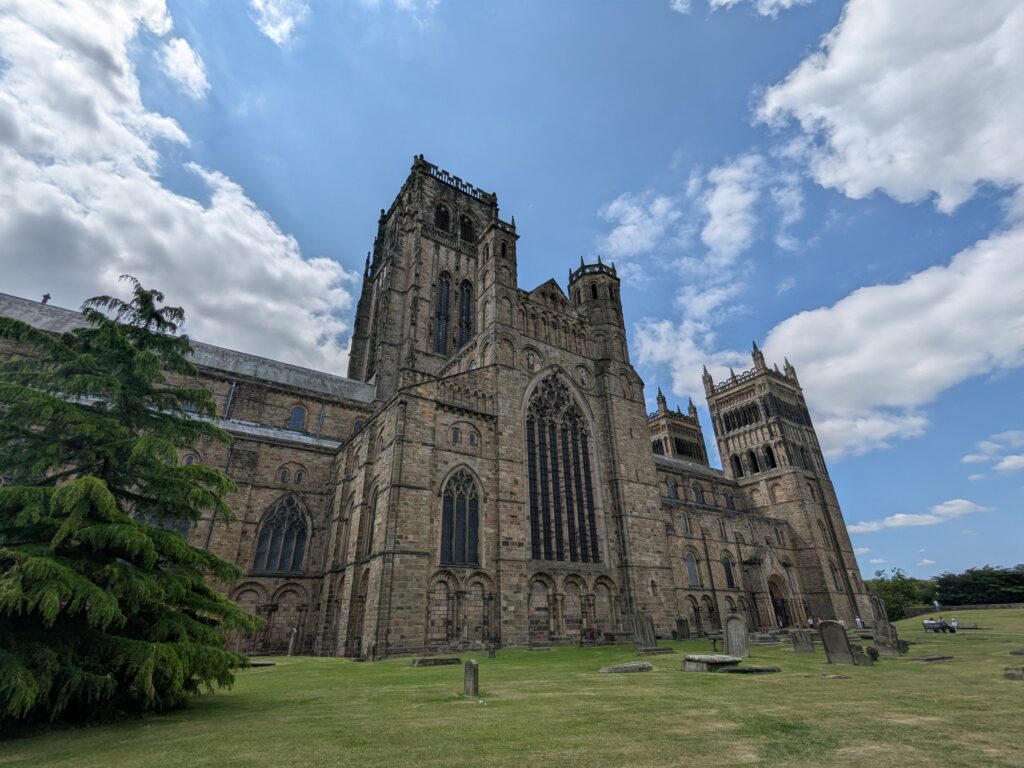
A few weeks ago, I went to York in northern England for meetings with fellow clergy from various Anglican Churches from Scotland, England, Croatia, Germany, and the US. We discussed the future of Christianity in Europe and prayed about our mission in it. The Dutch missiologist Stefan Paas gave a keynote lecture. He is the author of books such as Church Planting in the Secular West. Learning from the European Experience, and Pilgrims and Priests. Christian Mission in a Post-Christian Society. Paas defines our secular age as post-christendom, post-Christian, and post-modern all at once. Post-Christendom means that the old reality…Continue readingTrends in post-Christian Europe
Recently, there have been some interesting reports about churches across Europe. In the UK, the Bible Society released a report called The Quiet Revival. It challenges the idea that churches are in terminal decline. It notes that, while mainstream churches are struggling, the churches with a more clearly defined profile, whether Catholic or Pentecostal, see growth. Churches are also becoming more ethnically diverse. However, the quote that was picked up by most commentators was this: The Quiet Revival shows that the most dramatic church growth is among young adults, particularly young men. In 2018, just 4 per cent of 18–24-year-olds said…Continue readingWhat is happening with Gen Z?

This post is inspired by a recent video by Paul VanderKlay, a C.R.C. pastor in California and a very productive YouTuber. On his channel, he tries to do what I am doing here: make sense of our current cultural moment. I like what he does, but it is obviously from an American perspective, so let me reframe his latest video. Link: As Frontier Theology Thins Metagelicalism Reconnects Post-Nones with Tradition This video deals with part of the genealogy of the Metagelical Moment, a term coined by Paul himself. He describes American “evangelicalism” as the attempt of the post-fundamentalists to become…Continue readingThe Metagelical Moment Reframed
Welcome to Europe At Midnight, an exploration of emerging religious trends and the future of Christianity in post-secular Europe. What is this about? In crisis It is cliche to say that Europe is in a meta-crisis. A meta-crisis is usually defined as more than the sum of its parts: the ecological crisis + the economic crisis + the geopolitical crisis + the meaning crisis & the culture wars. It is the unravelling of culture itself, the great shake-up of all things. The question is: what does it mean? The secular Once, there was no ‘secular.’ And now we are ‘post-secular.’ Religions are back but…Continue readingIntroducing Europe At Midnight
Robert Ian Hitching (or “Bob” as we knew him) was born in an East London family in 1950. After a challenging youth, he had a profound conversion experience and joined Operation Mobilisation in 1970. He travelled overland alone to India and Nepal as a missionary. The main focus of his work during this decade would be in Turkey, where he spent time in prison for distributing Christian literature, and among Turkish people in London. In the eighties, Bob developed a media ministry (Reach and Teach) in Eastern Europe and Asia. During this time he also pioneered a film ministry for…Continue readingIn Memoriam Bob Hitching (1950-2024)