
Last month I had to opportunity to visit the United States of America. I met some wonderful people, had fantastic hosts, and enjoyed my time with an excellent group of other international guests. I also went to a ball game which I didn’t understand (see picture), but my inner anthropologist had a field day. I always feel very European when I am there. I left with many questions, a good thing. Asking questions is a way of trying to make sense of my experience. While experiences happen in the interaction between things outside us and our responses to them, reflection…Continue readingThe Consumer Experience
Category: Article
Articles are pieces with a long(er) line of thought
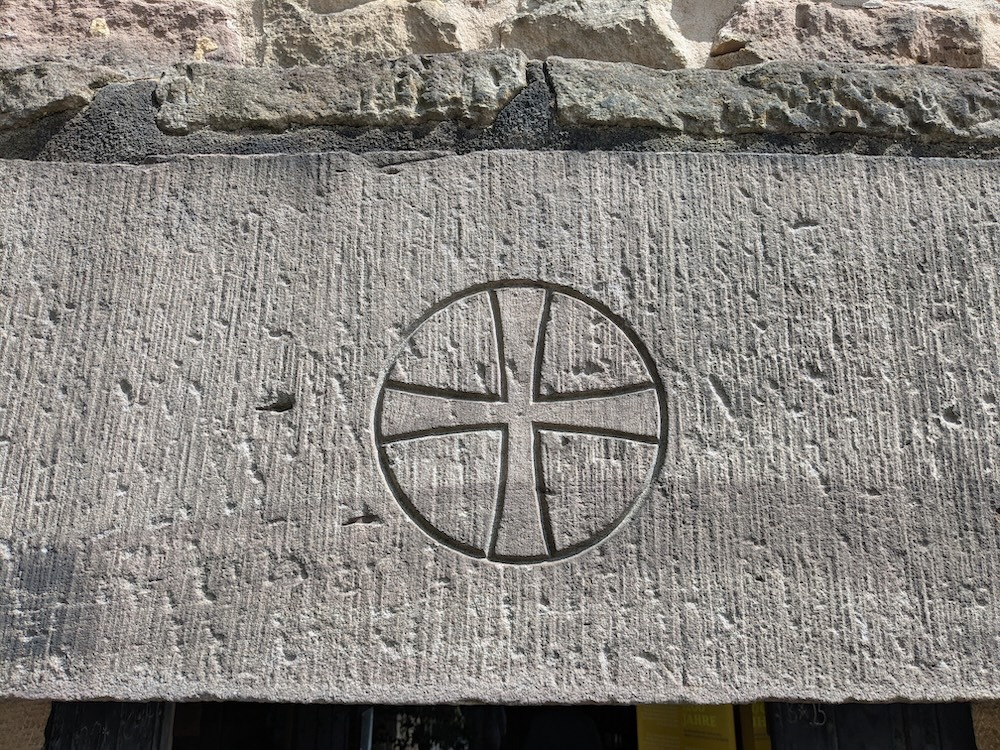
Here is the fourth movement of East Coker, the second of his Four Quartets, in which T.S. Eliot explains why we call this Friday good. IV The wounded surgeon plies the steelThat questions the distempered part;Beneath the bleeding hands we feelThe sharp compassion of the healer’s artResolving the enigma of the fever chart. Our only health is the diseaseIf we obey the dying nurseWhose constant care is not to pleaseBut to remind us of our, and Adam’s curse,And that, to be restored, our sickness must grow worse. The whole earth is our hospitalEndowed by the ruined millionaire,Wherein, if we do well, we shallDie of the…Continue readingWe call this Friday good

Last year I linked to a remarkable report, published by the Bible Society in the UK. Last week, the Bible Society has withdrawn the report. What is happening? As you can read in this statement from Paul Williams, the data provided by YouGov (the polling organisation behind the research) turned out to be faulty and the Bible Society pulled the report. YouGov made mistakes, accepted responsibility, apologised, and they made it clear that the Bible Society could not have known that anything was wrong with the data. This does not mean that nothing can be said about the phenomena described…Continue readingQuiet faith, bad data, and hope

Europe changed in two generations from a patchwork of co-existing monocultures into a cosmopolitan network of increasingly diverse subcultures. The reactions to these trends are diverse. Some celebrate diversity and embrace the intercultural moment. Others feel that something essential is lost in the process, and some are unable to resist the siren call of political ideologies promising easy solutions at the expense of others. The combination of secularisation, cultural mixing and diversification also leads to more but smaller subcultures. There are simply more combinations to make, while each combination occurs less often. If we define culture as ‘people like us…Continue readingDisagreement is good. But how to do it well?
What do ‘Innovation, philosophy, and Christianity‘ have in common? They are the lens through which I try to make sense of the world. ‘Making sense of the world’, is what I usually tell people when they ask me what I do. Why do I write about this here? Because this frames the way in which I approach questions about the future of Christianity in Europe. Terms such as innovation, design, and philosophy make sense to me because of my personality and history. In projects and jobs that I really enjoyed, there was always an element of exploration, strategy, reflection, and…Continue readingMaking Sense of the World

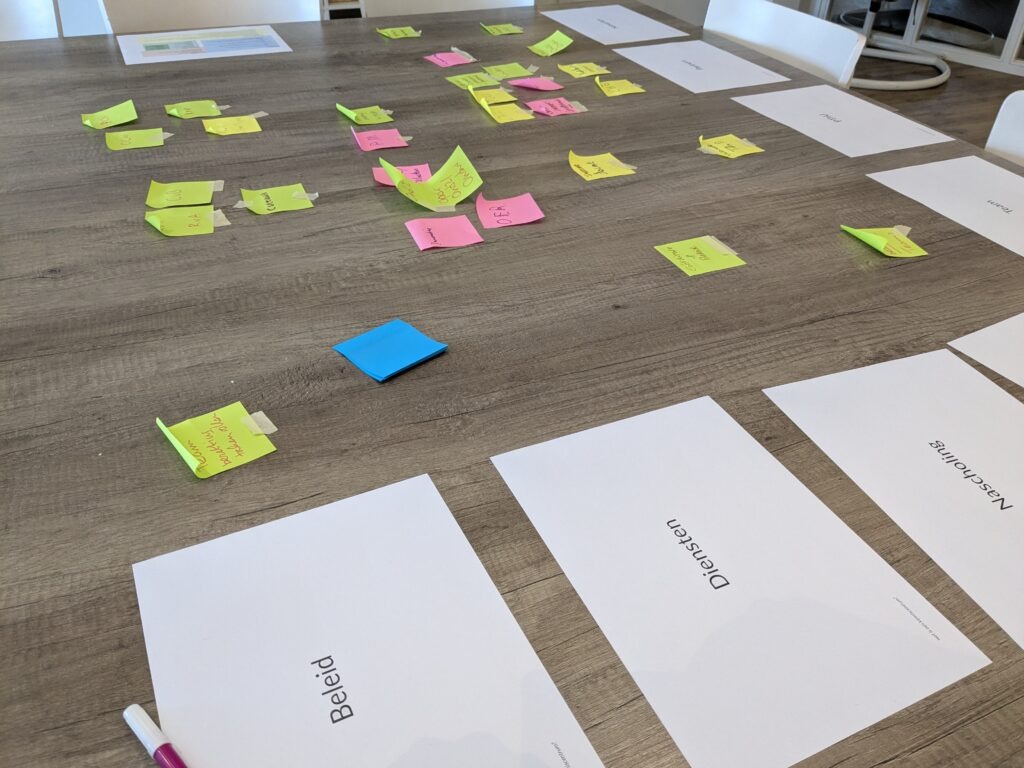
Faith and Culture. The Future of Christianity. Europe. These are some of the big things I write about here. The challenge is that these ‘things’ are so big and complex that we cannot treat them like simple yes-or-no questions. So, how do we think about big things? This is one way of looking at it: Last month I organised a workshop with my colleagues at the Knowledge Centre for Theology at the Protestant Theological University in Utrecht, NL. In the morning session, we looked at who we are. Inspired in part by John Willshire’s recent reflections on “things” and Zenko…Continue readingHow to Think About (Big) Things

Contrary to my general policy, the header image was generated by ChatGPT. This is what you get when you ask an AI system to generate a self-portrait. A nebulous installation of stars connected with wires of light. It suggests something we have come to associate with the letters ‘A’ and ‘I’, though I still wonder what it really means. In this post, I try to organise some of my, admittedly conflicted, feelings about the use of AI, specifically in the context of serious work. (It goes without saying that it is an utter waste to use any AI tools to…Continue readingIn the Mirror of the Averaging Interface?

“Something huge and beautiful and awe-inspiring.” That is what one recent convert to Christianity was looking for. The Times called it a ‘full-fat’ faith. Not a faith which comes neatly packaged in five slogans. This is not nostalgia, this is hunger. Some doubt the motivation of recent converts, assuming that they are actually more interested in cultural traditionalism than in certain theological truths of Christianity. But these people search for something big and fat because they know that the world is, in fact, complicated and life is challenging. Some of it is because the world is such a frightfully awesome…Continue readingStarting Points

The last day of the year is a good moment to reflect on this project. When I started this in December 2024, I had a few ideas but no fixed plan. I used this year to experiment and to get feedback from readers. In this brief post, I’ll share what I did, my thoughts on it, and what I plan to do in 2026. What I did in 2025 What Europe At Midnight will be in 2026 In general, I am happy with Europe At Midnight as a platform for thinking out loud about culture, faith and the future of…Continue readingEurope At Midnight After One Year

One saturday morning in November, I gave a talk at the Breakwater conference. It was an event organised by the Dutch Estuary group. “Estuary is a place where people come for conversation. Honest conversation. Not ideological warfare, memes, and trolling, but mutually respectful attempts to understand one another, and to learn to appreciate different perspectives and viewpoints.” (see website for more info.) Estuary emerged from the work of Paul VanderKlay, a CRC pastor in California and a prolific YouTuber who has conversations with random people on the internet. Here is his conversation with me. (This is a short clip about…Continue readingBreakwater, or the art of conversation